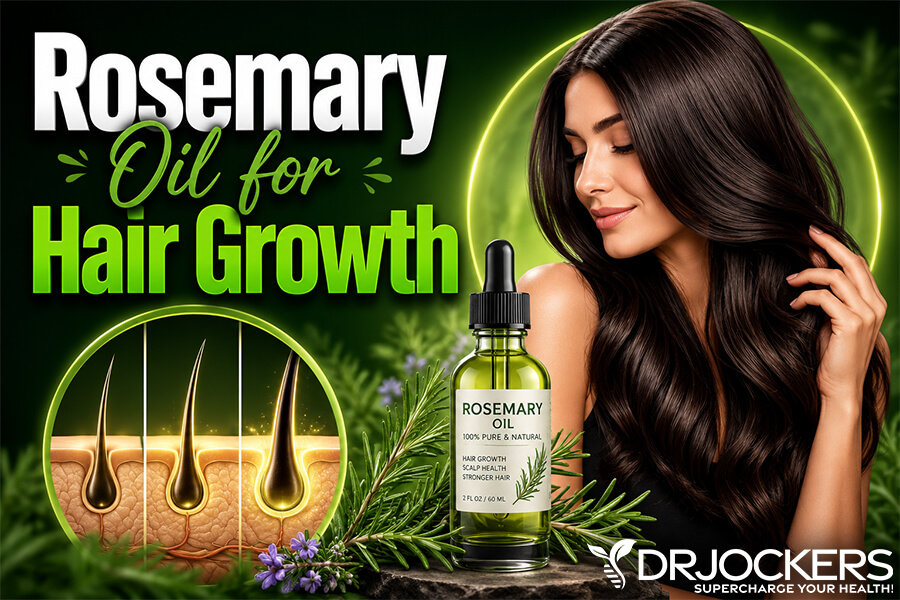
 Rosemary Oil for Hair Growth: Nature’s Answer to Minoxidil
If you’ve ever stood in the shower watching strands collect around the drain or caught your part looking a little wider in the bathroom mirror, you already know the quiet anxiety that comes with thinning hair.
You are not imagining it, and you are far from alone. By midlife, the majority of men and a striking number of women notice their hair getting finer, flatter, and slower to grow back.
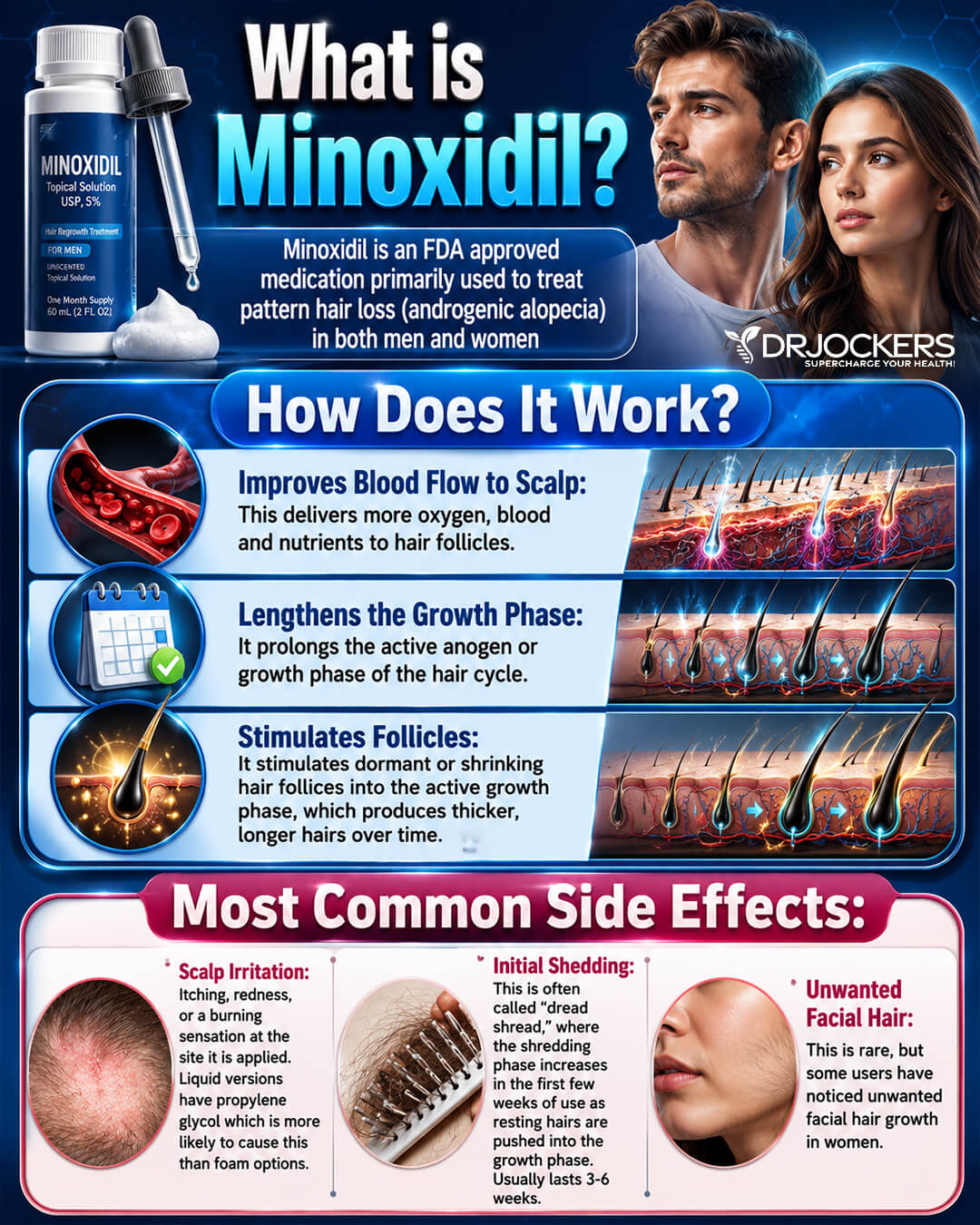
For decades, the conventional answer has been a short list of pharmaceuticals — most famously minoxidil (the active ingredient in Rogaine) and the prescription drug finasteride. They can work.
But they also come with strings attached: minoxidil has to be applied forever or the gains reverse, it frequently leaves the scalp itchy and flaky, and finasteride carries a risk of sexual side effects that makes a lot of people understandably nervous.
So it’s worth knowing that one of the most promising alternatives doesn’t come from a lab at all. It comes from a fragrant little shrub that’s probably growing in someone’s herb garden down the street: rosemary.
In this article, I’ll walk you through exactly why hair thins in the first place, what the research actually shows about rosemary oil for hair growth (including a head-to-head trial against minoxidil that genuinely surprised the researchers who ran it), and the supporting ingredients that make rosemary work harder.
At the end, I’ll share the exact formula I recommend — and how to use it so you actually see results.
Why Hair Actually Thins
Before you can fix thinning hair, it helps to understand the machinery underneath it.
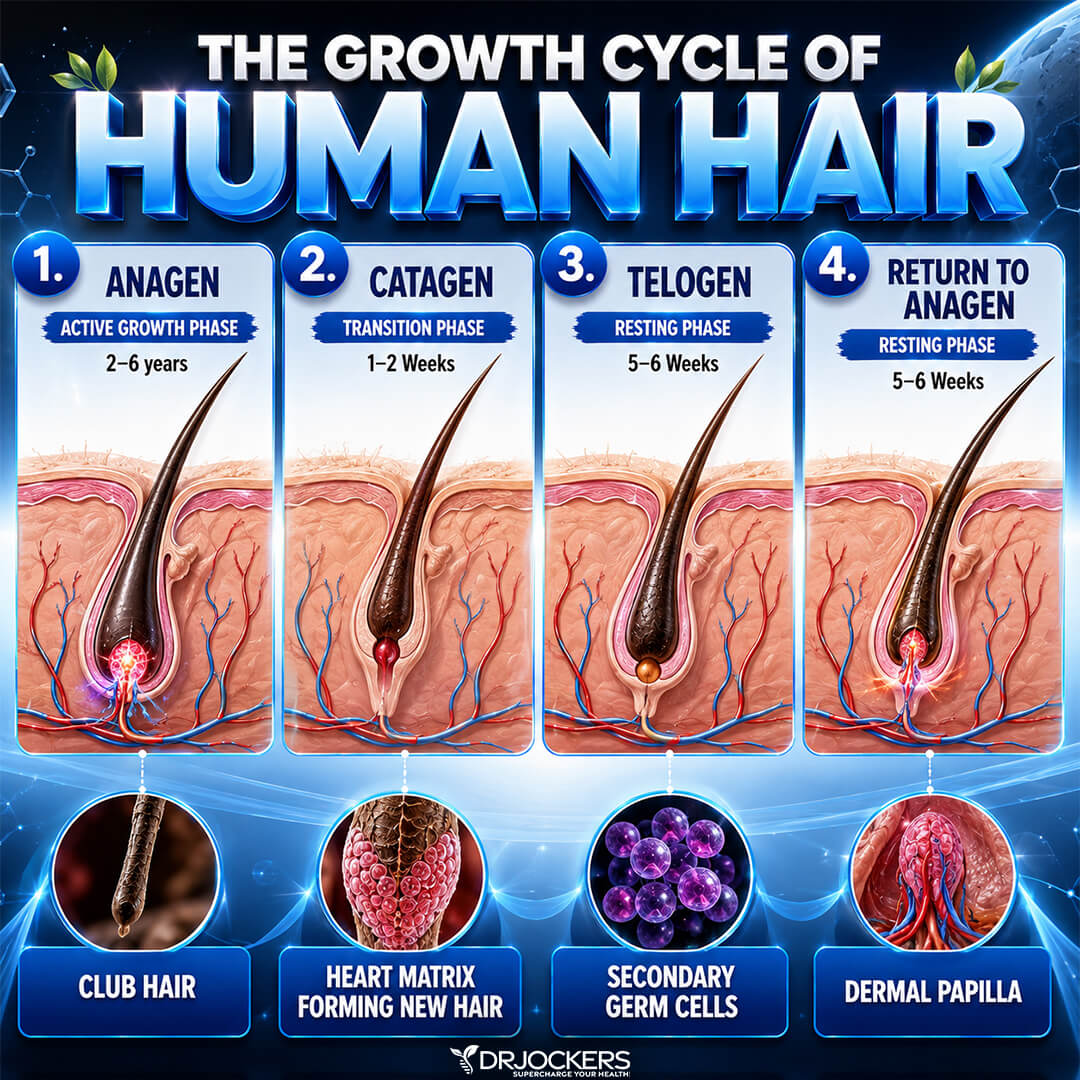
Each hair on your head grows from a follicle, and every follicle runs on a cycle: a long growth phase (anagen), a brief transition, and a resting-and-shedding phase (telogen). On a healthy scalp, the vast majority of your follicles are in the growth phase at any given time, and shedding is balanced by regrowth.
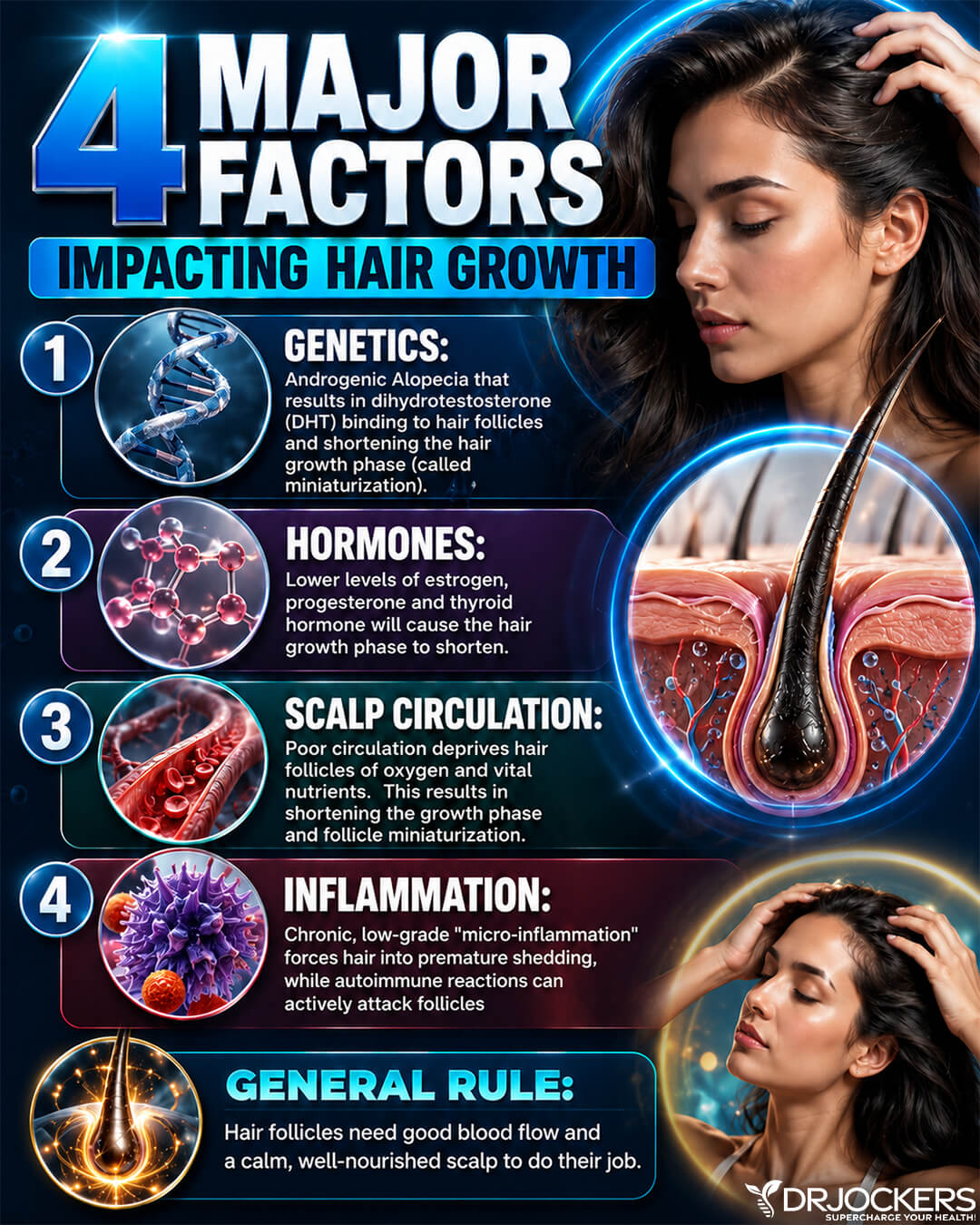
Pattern hair loss — the genetic kind, known as androgenetic alopecia — throws that balance off in two ways. First, the growth phase gets shorter, so hairs don’t reach the length or thickness they used to.
Second, the follicles themselves shrink in a process called miniaturization, driven largely by a hormone called dihydrotestosterone (DHT), a more potent derivative of testosterone. Miniaturized follicles produce thinner, wispier hairs until, eventually, they may stop producing visible hair at all.
There’s a third factor that gets far less attention than it deserves: scalp circulation. Follicles are metabolically demanding little organs, and they depend on a rich supply of blood to deliver oxygen and nutrients.
When microcirculation in the scalp is sluggish, follicles are effectively underfed. Add in low-grade inflammation and oxidative stress — both common on aging or irritated scalps — and you have an environment where hair struggles to thrive.
Hold onto that idea, because it’s the key to everything that follows: follicles need good blood flow and a calm, well-nourished scalp to do their job. That’s precisely the lever rosemary appears to pull.
Rosemary Oil vs Minoxidil: What the Research Says
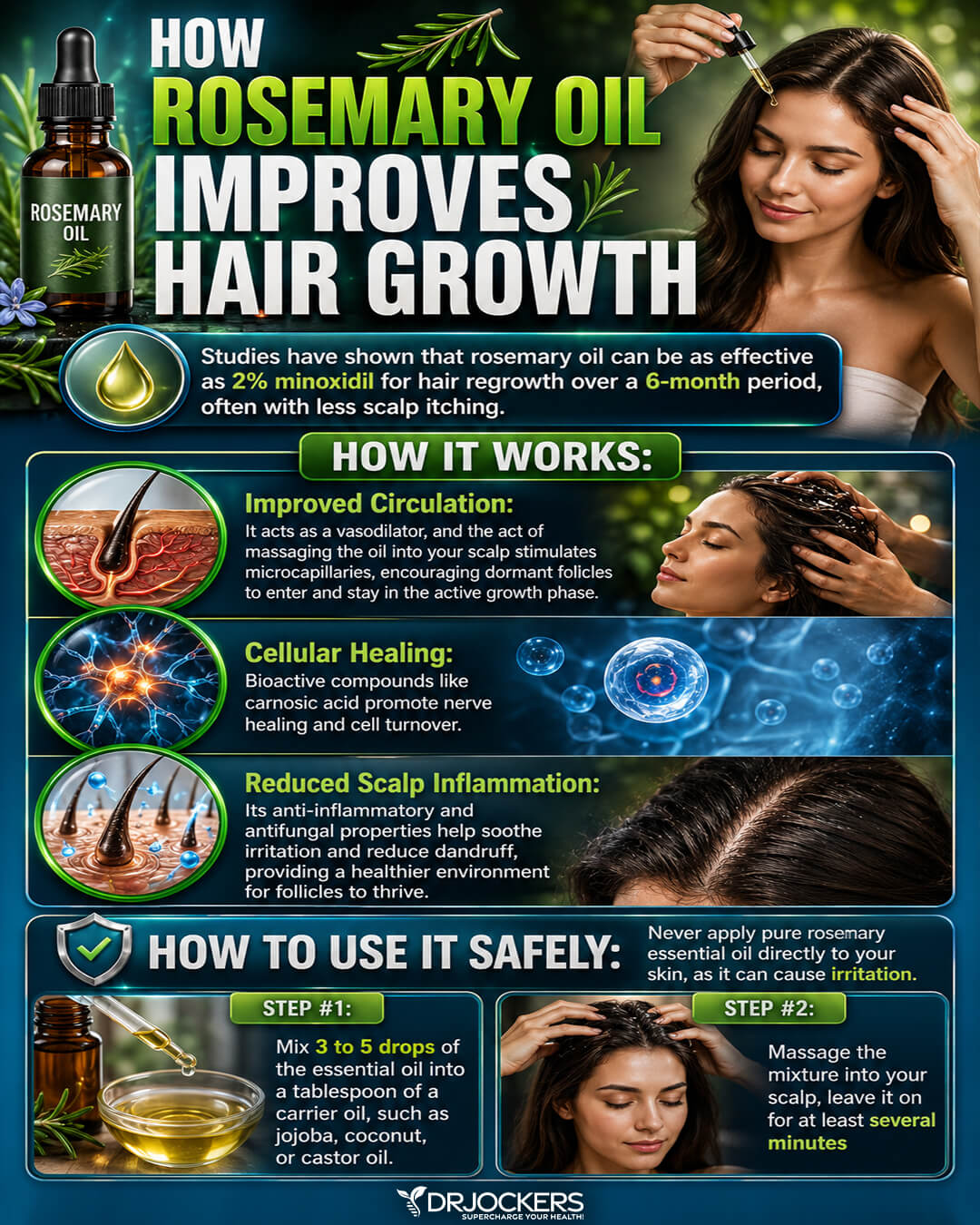
Here’s the short version: in one human trial that put them head to head, rosemary oil performed about as well as minoxidil 2% over six months — with fewer side effects. Now let’s look at the details, because the details matter.
The Head-to-Head Trial
In 2015, a team of researchers published a randomized comparative trial in the journal SKINmed [1]. They recruited 100 people with androgenetic alopecia and split them into two groups. One group applied rosemary oil to the scalp; the other applied minoxidil 2%, the standard over-the-counter strength. The trial ran for six months, with standardized photographic hair counts taken at the start, at three months, and at six months.
At the three-month mark, neither group had changed much — a useful reminder that hair treatments take time. But by six months, both groups showed a significant increase in hair count compared to where they started, and the two treatments came out roughly comparable to each other [1].
There was one more finding worth flagging. Scalp itching was significantly more common in the minoxidil group [1]. Anyone who has abandoned a bottle of minoxidil because of a flaky, itchy scalp will appreciate why that detail stood out.
How Rosemary Works
Rosemary isn’t magic; it has plausible biology behind it. Rosmarinus officinalis is recognized for enhancing microcapillary perfusion. In plain terms, it helps improve blood flow through the tiny vessels that feed your follicles [1]. Remember the lesson from the last section: better circulation means better-fed follicles.
There’s also evidence it works on the hormonal side. A 2013 study in Phytotherapy Research found that rosemary leaf extract promoted hair regrowth in animals, and pointed to its ability to interfere with DHT activity at the follicle as part of the mechanism [2]. In other words, rosemary may chip away at both of the major drivers of thinning: poor circulation and DHT-driven miniaturization.
This isn’t an entirely new idea, either. Going back to 1998, a randomized controlled trial in the Archives of Dermatology tested an essential-oil blend that included rosemary, massaged into the scalp daily, against a carrier-oil-only control in people with alopecia areata. The essential-oil group showed significantly greater improvement [3].
The Takeaway
What the research supports is this: rosemary oil is a genuinely promising, well-tolerated, plant-based option with real human data behind it. That’s a rare thing in the world of natural hair remedies, where most claims rest on tradition alone.
Why Rosemary Oil Alone Isn’t Enough
If rosemary is this good, why not just buy a bottle of pure rosemary essential oil and call it a day?
Two reasons.
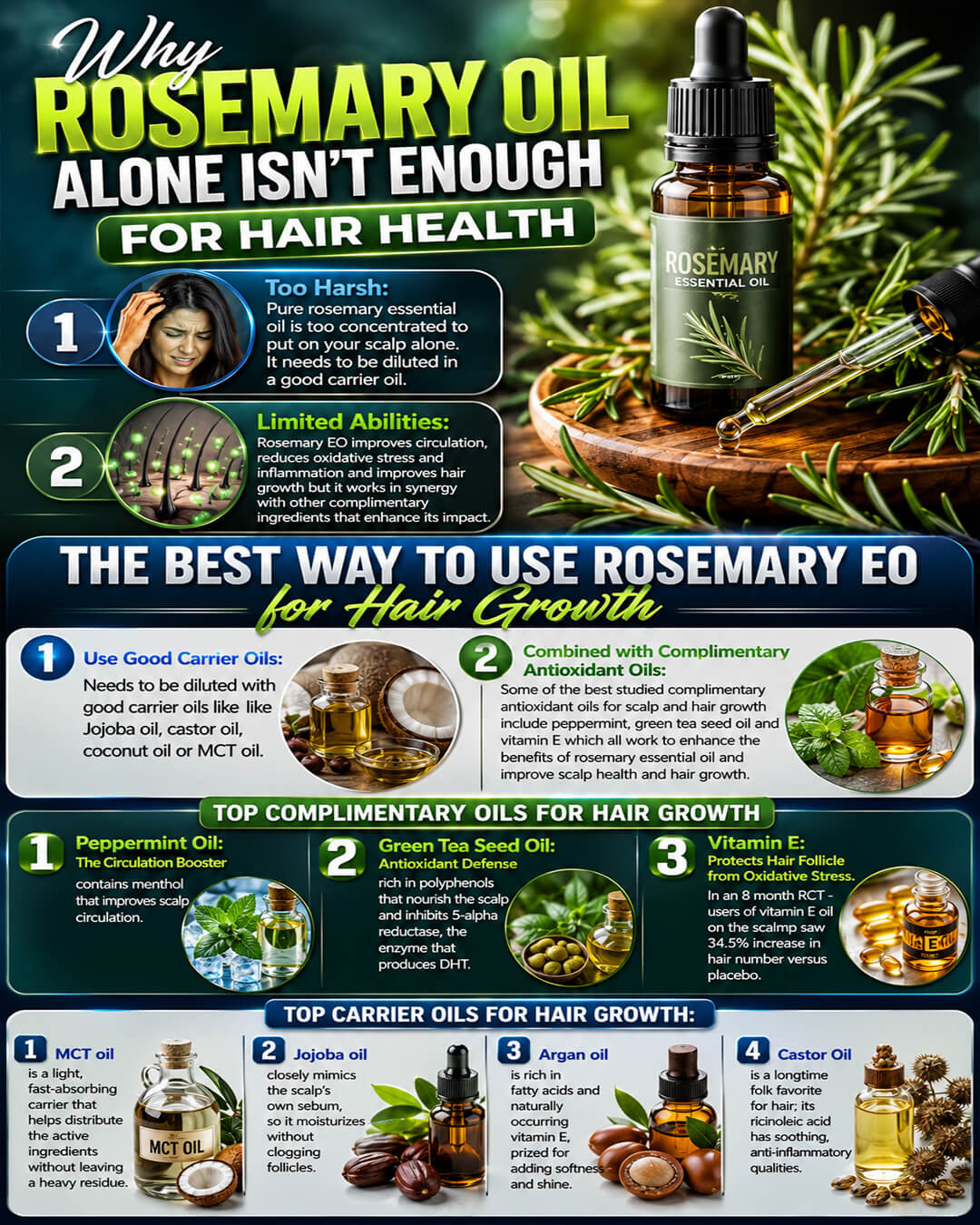
First, pure rosemary essential oil is far too concentrated to put directly on your scalp. Undiluted, it can cause burning, redness, and irritation — the opposite of the calm scalp environment you’re trying to create. Essential oils are meant to be blended into a carrier oil before they touch skin. Skip that step and you risk trading thinning hair for an angry, inflamed scalp.
Second, rosemary pulls one or two levers — but healthy hair responds to several at once. Circulation matters, yes. But so does taming oxidative stress, soothing inflammation, conditioning the hair shaft so it stops snapping off, and keeping the scalp’s microbial balance in check. A single ingredient can’t cover all of that.
This is exactly why the smartest approach isn’t rosemary instead of everything else — it’s rosemary properly diluted in nourishing carrier oils and paired with complementary actives that hit the other levers of scalp health. A well-built serum does in one step what would otherwise take a shelf full of bottles. (I’ll point you to the one I recommend a little further down.)
The Supporting Oils That Make Rosemary Work Harder
Here’s where a thoughtfully formulated blend earns its keep. Each of these ingredients brings something rosemary doesn’t.
Peppermint Oil — The Circulation Booster
Peppermint is rosemary’s natural partner. In a 2014 study published in Toxicological Research, researchers tested 3% peppermint oil against several comparisons — including 3% minoxidil — in mice. The peppermint group showed the most prominent hair growth of any group, with measurable increases in follicle number, follicle depth, and dermal thickness [4].
Interesting note: The cooling tingle you feel from peppermint is a clue to its mechanism — menthol is associated with a temporary increase in local blood flow, which fits neatly with the circulation theme running through this whole article.
Green Tea Seed Oil — Antioxidant Defense
Green tea is one of the most studied plants on earth, and its star compound, EGCG (epigallocatechin-3-gallate), has been investigated for hair specifically.
A 2007 study in Phytomedicine found that EGCG promoted growth in cultured human hair follicles and stimulated the proliferation of dermal papilla cells — the command center at the base of each follicle [5]. EGCG has also been shown to inhibit 5-alpha-reductase, the enzyme that produces DHT [5].
Green tea’s polyphenols bring antioxidant defense to the scalp, helping counter the oxidative stress that ages follicles.
Vitamin E — protecting the follicle from oxidative stress
There’s a real link between oxidative stress and hair loss: people with alopecia tend to show lower antioxidant levels and more lipid peroxidation in the scalp.
That’s the rationale behind vitamin E. In an 8-month randomized, placebo-controlled trial published in Tropical Life Sciences Research, volunteers supplementing with mixed tocotrienols (a form of vitamin E) saw a 34.5% increase in hair number versus placebo, an effect the authors attributed to reduced scalp oxidative stress [6].

The Carrier and Conditioning Oils
The rest of a good blend does the quieter, foundational work — and here I want to be candid: oils like MCT, jojoba, argan, and castor are valued mainly as carriers and conditioners, not because each one has its own stack of hair-regrowth trials.
- MCT oil is a light, fast-absorbing carrier that helps distribute the active ingredients without leaving a heavy residue.
- Jojoba oil closely mimics the scalp’s own sebum, so it moisturizes without clogging follicles.
- Argan oil is rich in fatty acids and naturally occurring vitamin E, prized for adding softness and shine.
- Castor oil is a longtime folk favorite for hair; its ricinoleic acid has soothing, anti-inflammatory qualities.
Their job is to keep the scalp moisturized and calm and to coat the hair shaft so it resists breakage — which matters more than people realize, because a lot of “my hair won’t grow” is really “my hair keeps snapping off before it gets long.”
The Overlooked Multiplier: Scalp Massage
Here’s something that costs nothing and the research genuinely supports: the way you apply the oil may matter as much as the oil itself.
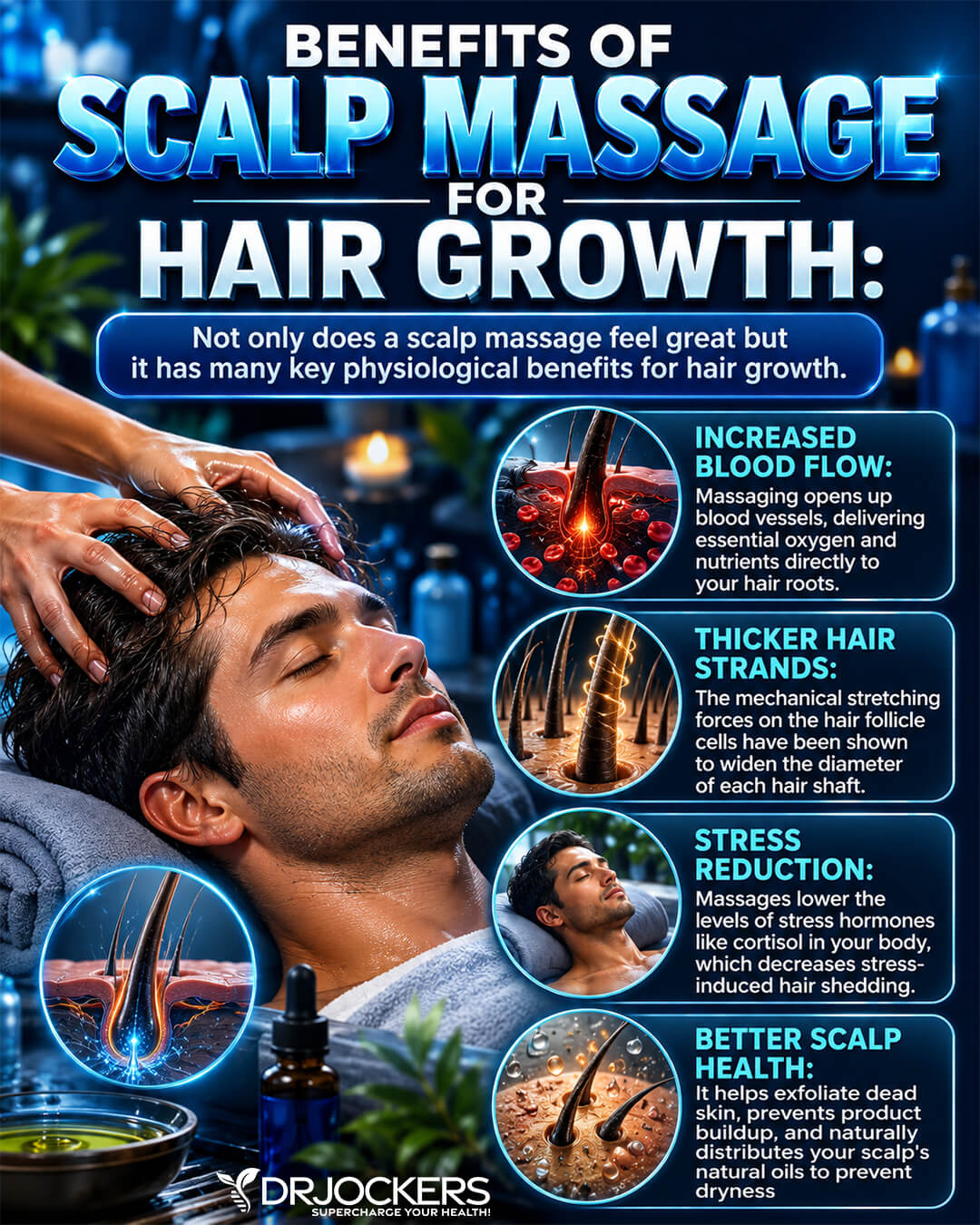
In a 2016 study in Eplasty, nine men performed four minutes of standardized scalp massage every day for 24 weeks. By the end, their hair had measurably increased in thickness [7]. The proposed mechanism is fascinating: the mechanical stretching of massage appears to physically stimulate the dermal papilla cells, switching on genes associated with hair growth [7].
A larger 2019 survey backed up the real-world version of this. Among people who massaged their scalps twice daily for at least six months, the majority self-reported stabilized or improved hair [8].
The takeaway is simple and a little bit wonderful: when you massage a serum into your scalp every day, you’re not just delivering rosemary, peppermint, and antioxidants. The massage itself is part of the therapy. Two mechanisms, one daily ritual.
What to Look for in a Rosemary Hair Serum
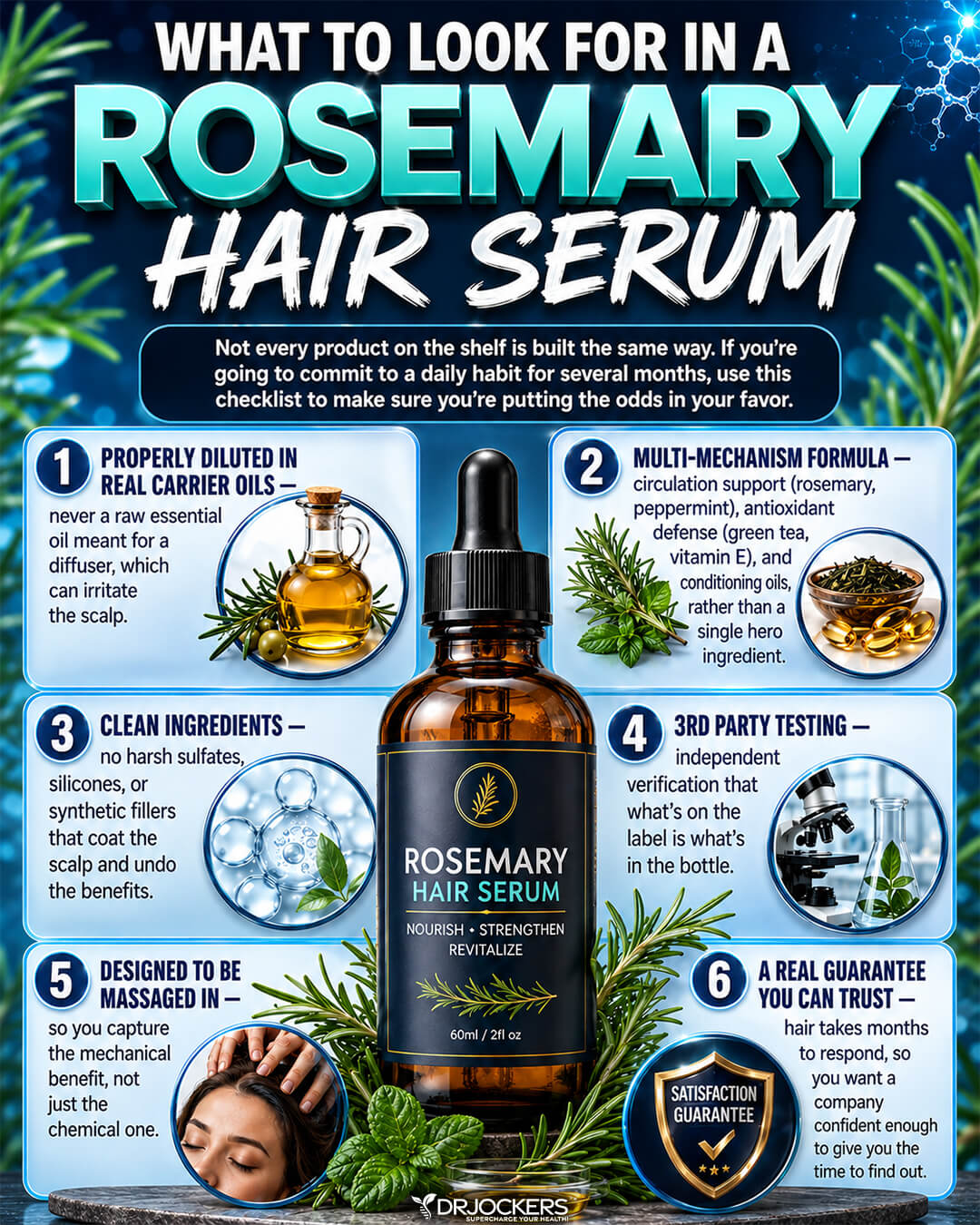
Not every product on the shelf is built the same way. If you’re going to commit to a daily habit for several months, use this checklist to make sure you’re putting the odds in your favor:
- Properly diluted rosemary in real carrier oils — never a raw essential oil meant for a diffuser, which can irritate the scalp.
- A multi-mechanism formula — circulation support (rosemary, peppermint), antioxidant defense (green tea, vitamin E), and conditioning oils, rather than a single hero ingredient.
- Clean ingredients — no harsh sulfates, silicones, or synthetic fillers that coat the scalp and undo the benefits.
- Third-party testing — independent verification that what’s on the label is what’s in the bottle.
- Designed to be massaged in — so you capture the mechanical benefit, not just the chemical one.
- A real guarantee — hair takes months to respond, so you want a company confident enough to give you the time to find out.
My Recommended Formula
When I lined up that checklist against what’s actually available, the formula that checked every box was EverBella’s Essential Growth Hair Serum.
It’s built around exactly the strategy the research points to. Rosemary oil sits at the center, properly diluted in a blend of light, nourishing carrier oils — MCT, jojoba, argan, and more — so it’s gentle enough for daily use.
Around it, the formula layers in the supporting cast we just covered: peppermint for that circulation-boosting tingle, green tea seed oil and vitamin E for antioxidant defense, and a roster of conditioning oils to keep the scalp calm and the hair shaft strong. It comes in peppermint for an invigorating morning scalp massage and lavender for a nightly calm one, and it’s made for both men and women.
Using it couldn’t be simpler, and it’s designed to capture the massage benefit too:
- Apply 3–5 drops directly to your scalp, focusing on thinning areas.
- Massage gently with your fingertips for a minute or two — this is where the mechanical magic happens.
- Because it’s an oil blend, it’s easiest to apply at night and rinse in the morning.
Then comes the part that’s genuinely the hardest: consistency. Remember the rosemary trial showed nothing at three months and meaningful results by six. Hair operates on hair-cycle time, not internet time. Give it a few months of daily use before you judge it.
That’s also why the guarantee matters here. EverBella backs the serum with a 180-day, money-back guarantee — a full six months, even on opened and used bottles. That’s not a throwaway marketing line; it’s roughly the exact window the research says you need to fairly evaluate a hair treatment. It means you can give the serum an honest, consistent trial with zero financial risk.
👉 Try EverBella’s Essential Growth Hair Serum here.
Frequently Asked Questions
Does rosemary oil really regrow hair? The best human evidence is a 2015 randomized trial in which rosemary oil produced hair-count increases comparable to minoxidil 2% over six months, with less scalp itching [1].
How long until I see results? Plan on months, not weeks. In the rosemary trial, there was no significant change at three months but a meaningful increase by six [1]. Daily consistency over a full hair cycle is what gives any treatment a fair chance to work.
Can I use rosemary oil and minoxidil together? Many people do use a natural serum alongside other treatments, but because minoxidil is a drug, talk to your doctor or dermatologist before combining them — especially if you have a sensitive scalp or any underlying condition.
Is it safe for color-treated hair and all hair types? A gentle, oil-based serum is generally well suited to all hair types and typically friendly to color-treated hair. As with any new product, do a small patch test first, and don’t apply it to broken or irritated skin.
Does it work for both men and women? Yes. Thinning hair affects both, and the scalp-and-follicle approach behind a rosemary serum applies regardless of gender.
Final Thoughts
Thinning hair can feel like something that’s simply happening to you — but the biology says otherwise. Follicles respond to their environment, and you have real influence over that environment: the circulation feeding them, the oxidative stress wearing them down, and the daily care they receive.
Rosemary oil is one of the very few natural ingredients that has stood up in a head-to-head human trial against the pharmaceutical gold standard — and it did so while being gentler on the scalp [1]. Pair it with circulation-boosting peppermint, antioxidant green tea and vitamin E, nourishing carrier oils, and a few minutes of daily scalp massage, and you’ve assembled a genuinely evidence-informed routine — no prescription required.
If you’d rather not build that blend from a dozen separate bottles, EverBella’s Essential Growth Hair Serum packages the whole strategy into one daily ritual, backed by a six-month guarantee that gives you the time hair actually needs. Be consistent, be patient, and give your follicles what they’ve been missing.
Sources in This Article
1. Panahi Y, Taghizadeh M, Marzony ET, Sahebkar A. Rosemary oil vs minoxidil 2% for the treatment of androgenetic alopecia: a randomized comparative trial. Skinmed. 2015;13(1):15-21. PMID: 25842469. Link
2. Murata K, Noguchi K, Kondo M, et al. Promotion of hair growth by Rosmarinus officinalis leaf extract. Phytother Res. 2013;27(2):212-217. PMID: 22517595. Link
3. Hay IC, Jamieson M, Ormerod AD. Randomized trial of aromatherapy. Successful treatment for alopecia areata. Arch Dermatol. 1998;134(11):1349-1352. PMID: 9828867. Link
4. Oh JY, Park MA, Kim YC. Peppermint oil promotes hair growth without toxic signs. Toxicol Res. 2014;30(4):297-304. PMID: 25584150. Link
5. Kwon OS, Han JH, Yoo HG, et al. Human hair growth enhancement in vitro by green tea epigallocatechin-3-gallate (EGCG). Phytomedicine. 2007;14(7-8):551-555. PMID: 17092697. Link
6. Beoy LA, Woei WJ, Hay YK. Effects of tocotrienol supplementation on hair growth in human volunteers. Trop Life Sci Res. 2010;21(2):91-99. PMID: 24575202. Link
7. Koyama T, Kobayashi K, Hama T, Murakami K, Ogawa R. Standardized scalp massage results in increased hair thickness by inducing stretching forces to dermal papilla cells in the subcutaneous tissue. Eplasty. 2016;16:e8. PMID: 26904154. Link
8. English RS, Barazesh JM. Self-assessments of standardized scalp massages for androgenic alopecia: survey results. Dermatol Ther (Heidelb). 2019;9(1):167-178. PMID: 30659511. Link